Why Failure Usually Starts at the Interface
Concrete, glass, silica sand, quartz and most mineral fillers are hydrophilic and chemically inert toward organic resins. An epoxy, phenolic or polyester system will cure into a hard film on top of them — but it never forms a real chemical bond with the surface.
The consequences show up later, usually in this order:
- Adhesion loss and edge lift after moisture exposure
- Fillers and pigments that agglomerate, settle, or debond from the matrix
- Reinforced plastics that fall short on bending, compressive and shear strength
- Molding sand that loses strength and moisture resistance in service
- Premature failure at the substrate while the coating film itself is still intact
The instinct is to reformulate the resin. But no resin reformulation fixes a substrate that chemically refuses to bond.
What KH-550 Does
MOON-KH550 is 3-aminopropyltriethoxysilane. The molecule carries two different reactive ends:
- An ethoxy end that hydrolyses to a silanol and condenses with hydroxyl groups on the inorganic surface, forming a stable Si–O–Si / Si–O–M linkage.
- An amino end that reacts into epoxy, phenolic, polyester, polyurethane, PBT, polyamide and polycarbonate systems.
Where the two ends meet, the interface stops being a boundary and becomes part of the structure. Formulators specify KH-550 for:
- Higher dry and wet adhesion between polymer and filler
- Better wettability and dispersion of fillers and pigments in the polymer
- Improved bending, compressive and shear strength in reinforced systems
- Better retention of electrical and mechanical performance under humid conditions
- Improved water resistance and aging resistance of the finished product
Technical Specifications
| Parameter | Specification |
|---|---|
| Product Code | MOON-KH550 |
| Chemical Name | 3-Aminopropyltriethoxysilane |
| CAS No. | 919-30-2 |
| EINECS No. | 213-048-4 |
| Molecular Formula | C₉H₂₃NO₃Si |
| Appearance | Colorless clear liquid |
| Content | 98% |
| Density (ρ20) | 0.9510 ± 0.005 g/cm³ |
| Refractive Index (n²⁵D) | 1.4225 ± 0.0050 |
| Packaging | 210 L iron drum — 190 kg/drum · 1000 L IBC — 950 kg/drum |
| Equivalent Grades | GE A-1100 · Dow Corning Z-6011 · Shin-Etsu KBM-903 · Degussa AMEO · Chisso S330 Equivalent grades are given for identification only and do not imply any affiliation with the trademark owners. |
Full technical data is available in the TDS and SDS. Request both before specifying KH-550 in a production formulation.
Typical Applications
🏗️ Mineral-Filled Thermoplastics & Thermosets
Phenolic, polyester, epoxy, PBT, polyamide and polycarbonate systems. Improves bending, compressive, shear strength and wet electrical properties.
⚙️ Thermoset Compounding
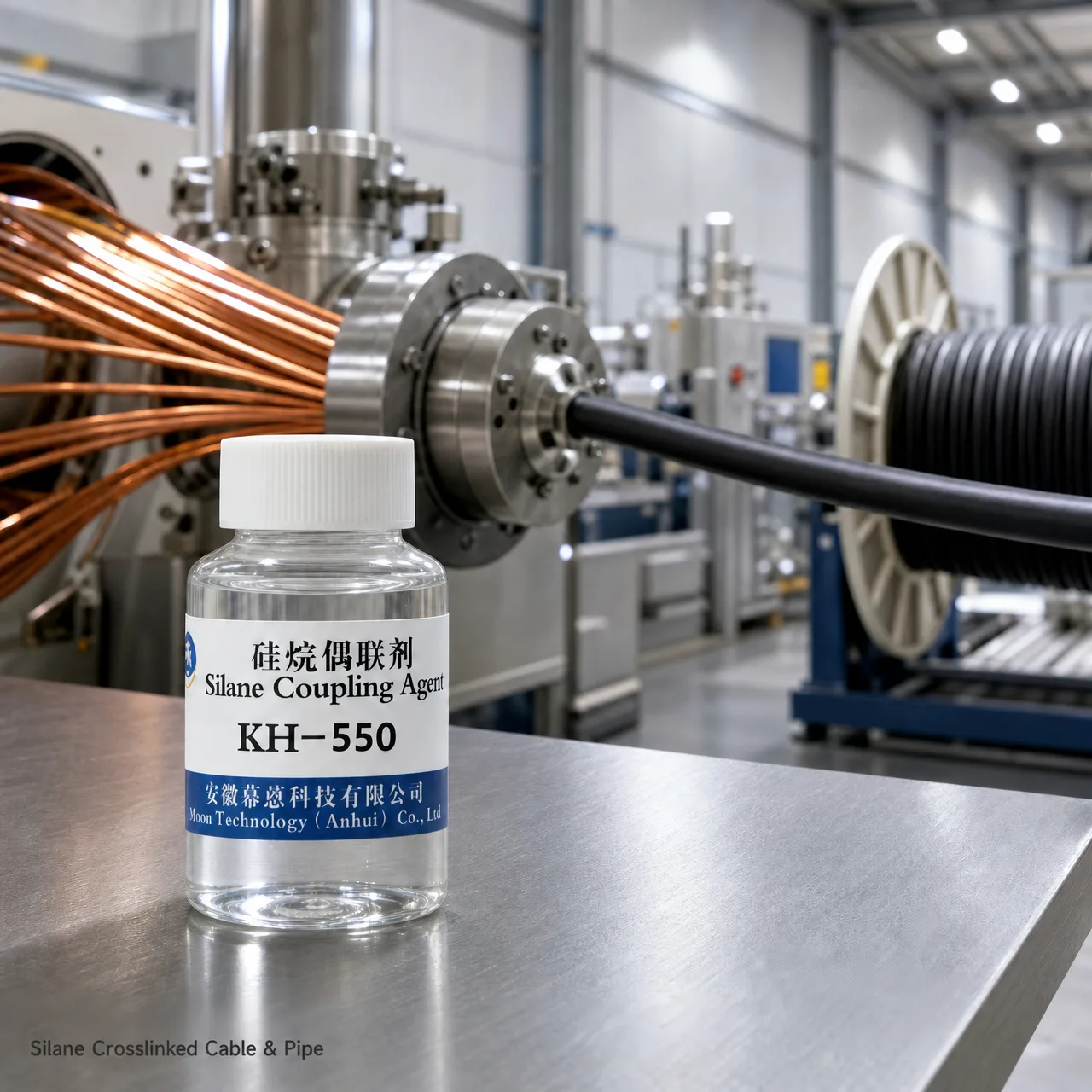
Better filler wetting and dispersion in the polymer matrix for consistent compound quality.
🏭 Resin Sand Casting
Strengthens adhesion between resin and silica sand, improving molding sand strength and moisture resistance.
🧵 Fiberglass & Mineral Wool
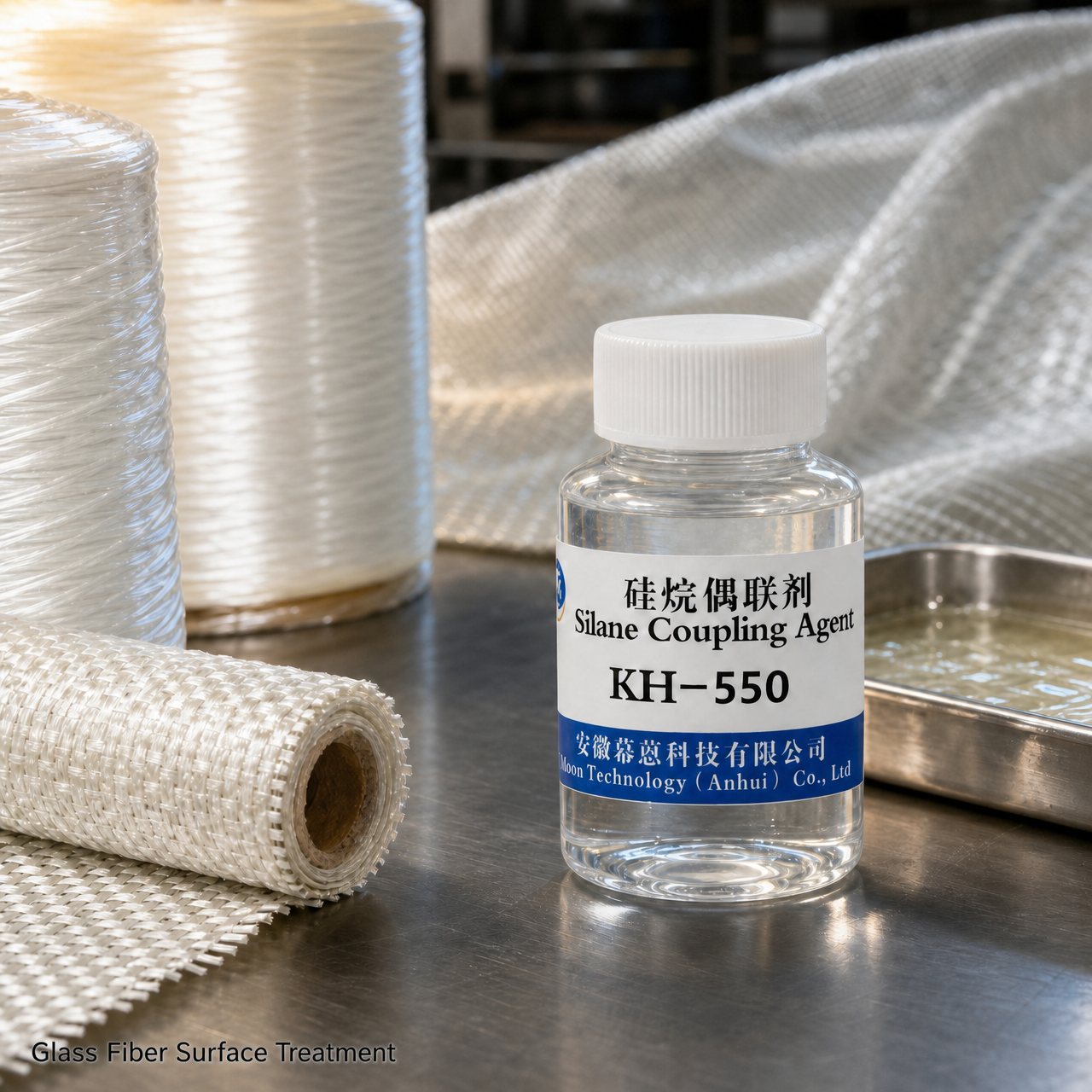
Added to phenolic binders, improves moisture resistance and compression resilience of the finished product.
🔩 Adhesives & Sealants
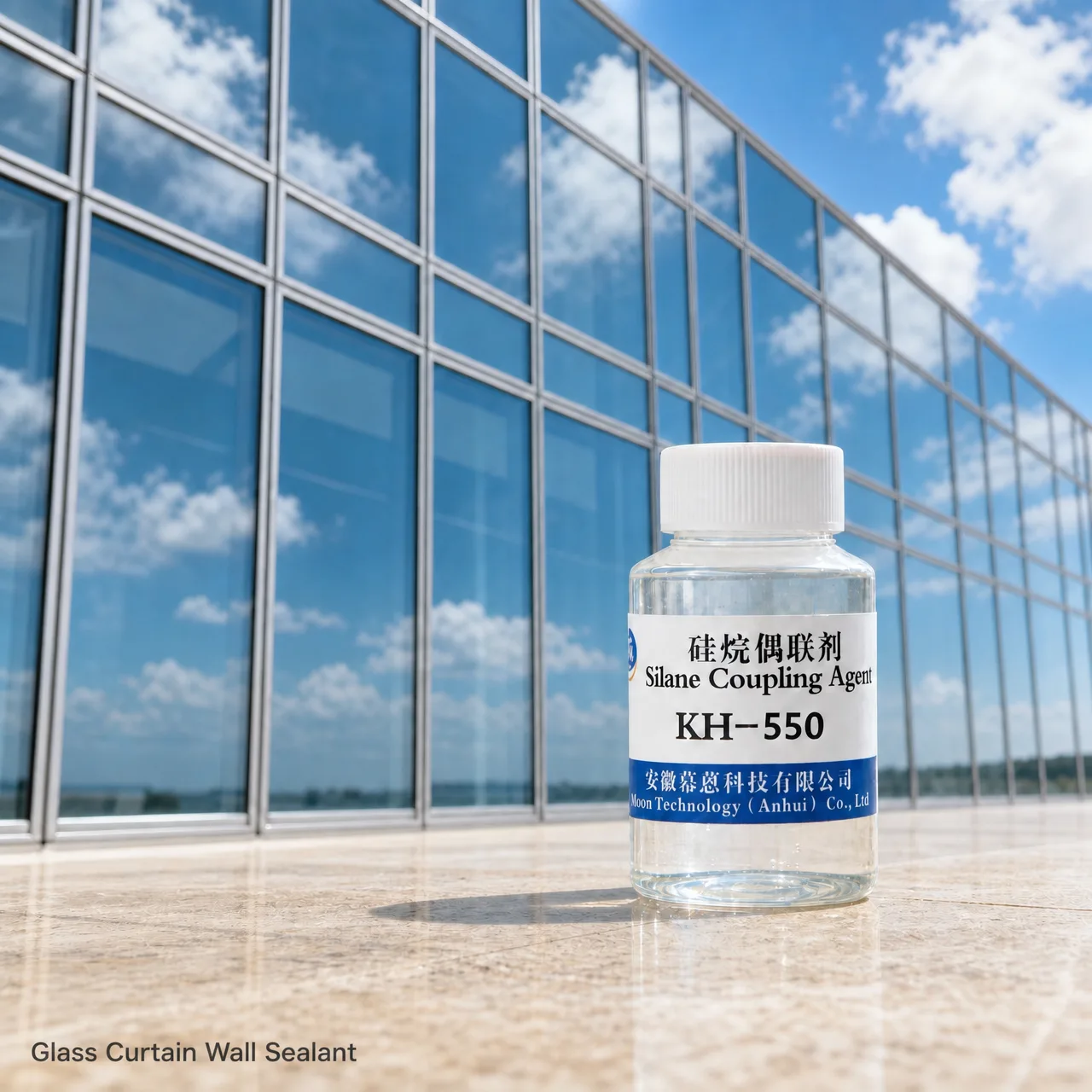
Bond promoter for polyurethane, epoxy, nitrile and phenolic adhesives. Improves adhesion to glass, aluminum and iron.
🎨 Coatings
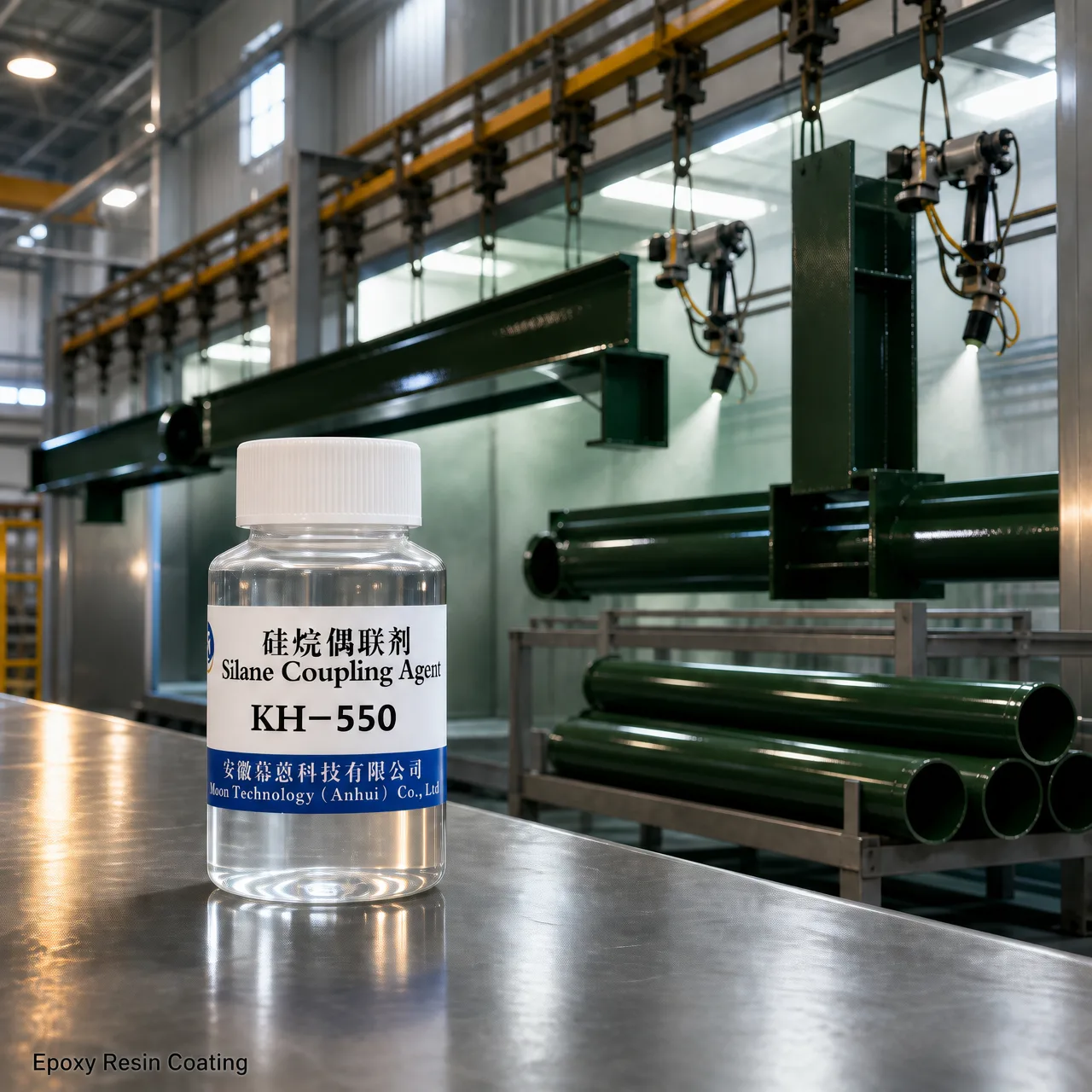
Used in polyurethane, epoxy and acrylic latex coatings to improve substrate adhesion and pigment dispersion.
How to Use It
KH-550 is typically applied in one of three ways:
- Dry-blended onto the filler or pigment before mixing into the resin
- Added directly into the resin during compounding
- Dilute pre-treatment on the substrate surface before coating or lamination
The right dosage depends on the filler surface area, the resin system and the performance you need — typically 0.5–1.5% by weight of filler (up to 2% when added directly into resin). Because the optimum is system-specific, we recommend a small trial batch before scaling to production.
Not Sure About Dosage for Your System?
Send us your formulation details and we will recommend a starting point — free, no obligation.
📩 Ask Our Technical TeamPackaging, Quality & Lead Time
- Packaging: 210 L iron drum (190 kg/drum) · 1000 L IBC (950 kg/drum)
- Batch Testing: Assay, density and refractive index against the specification above
- Documentation: TDS & SDS supplied with every batch. COA issued per batch on request.
- MOQ: 800 kg
- Lead Time: 7–15 days for standard packaging
- Port of Loading: FOB Shanghai
- Sample: 1 kg available — request your free sample
Frequently Asked Questions
Request the TDS, or a Sample for Your Own Formulation
Tell us your application — mineral-filled resin, glass fiber, molding sand, adhesives or coatings — and we will send the technical data sheet plus a sample so you can test MOON-KH550 in your own system.
📩 Request TDS & Sample