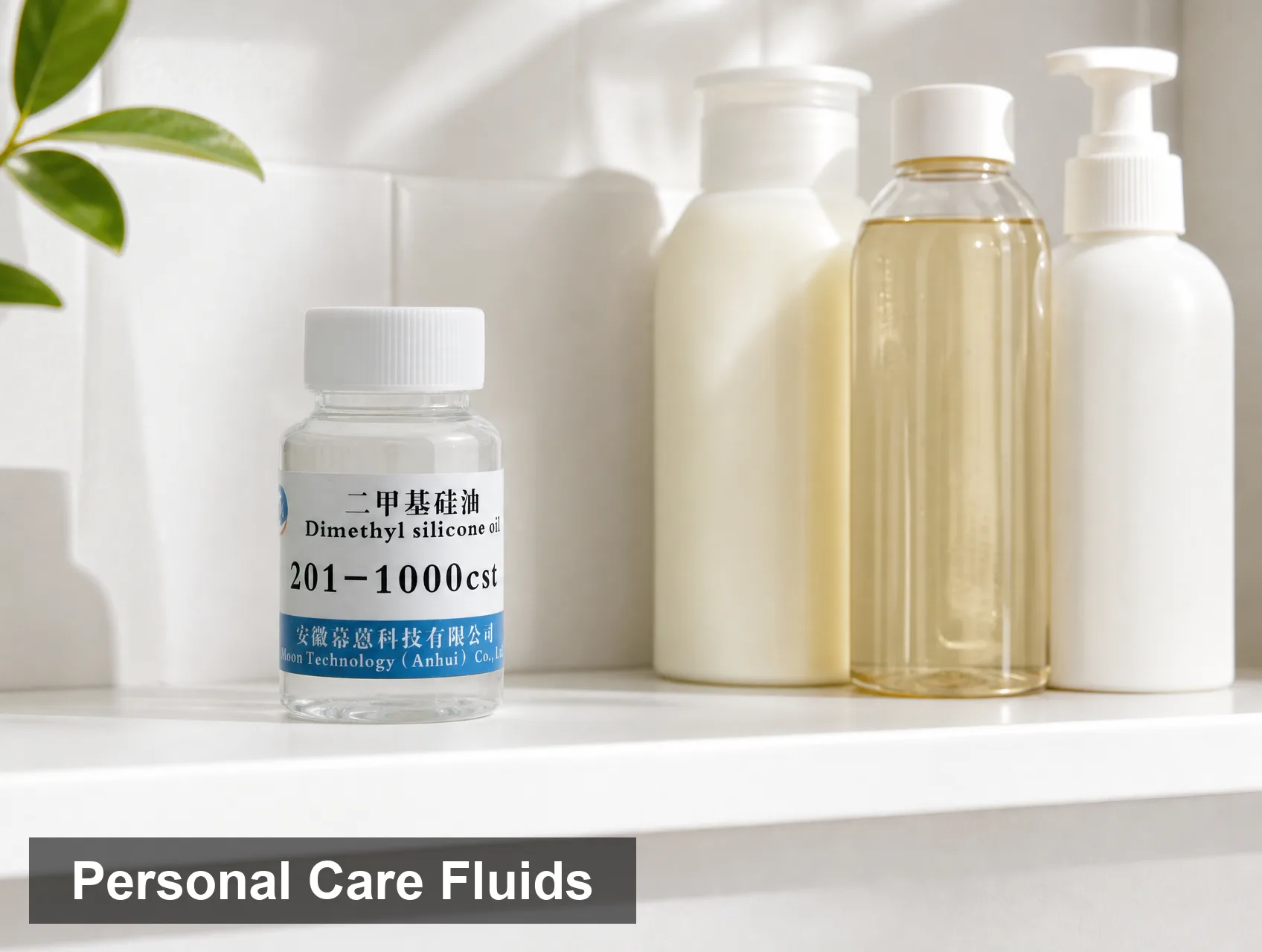
What Is Silicone Oil?
Silicone oil is a polymer based on polydimethylsiloxane (PDMS) — a backbone of alternating silicon and oxygen atoms with two methyl groups attached to each silicon. This Si–O–Si structure gives silicone oils their characteristic properties: low surface tension, high thermal stability, excellent dielectric properties, and wide operating temperature range.
Unlike mineral oils, silicone oils are chemically inert and do not carbonize easily at high temperatures. They are supplied in a wide range of viscosities from water-thin (0.65 cSt) to extremely viscous (over 1,000,000 cSt), and in several chemical types suited to different performance requirements.
Viscosity: The Primary Selection Parameter
Viscosity is measured in centistokes (cSt) and determines almost everything about how the oil behaves in your process. The table below is a practical starting reference — use it to narrow your options before matching to a chemical type.
| Viscosity Range | Typical Feel / Behaviour | Common Applications |
|---|---|---|
| 0.65 – 10 cSt | Water-thin, highly mobile | Anti-foam agents, release agents, cosmetics (quick absorb) |
| 10 – 100 cSt | Light, pourable | Textile lubricants, cosmetic base oils, defoamers |
| 100 – 1,000 cSt | Medium body, free-flowing | General industrial lubrication, cosmetics, dust control |
| 1,000 – 10,000 cSt | Moderately viscous, slow-flowing | Hydraulic fluids, mold release, fiber lubricants |
| 10,000 – 100,000 cSt | Thick, viscous | High-temperature lubrication, sealants, polymer additives |
| 100,000 – 1,000,000 cSt | Very thick, paste-like | Grease compounding, rubber modification, thermal interface materials |
When you are uncertain of the right viscosity for your process, the most practical approach is to describe your application — process temperature, substrate, method of application and performance requirement — and let us recommend a grade. We maintain viscosity tolerances of ±5% on standard grades.
Types of Silicone Oil: A Quick Comparison
Five chemical types cover the majority of industrial and cosmetic applications. Each offers a distinct performance profile.
🔵 Dimethyl Silicone Oil (201 Series)
The workhorse type. Inert, thermally stable (-40 to 200°C), electrically insulating. Standard for industrial lubrication, release, defoaming and thermal transfer.
🔘 D5 Cyclic Siloxane
Volatile cyclic siloxane (evaporates at room temperature). Light texture, excellent spreadability. Widely used in cosmetics and as RTV-2 release agents.
🟣 Methyl Phenyl Silicone Oil
Phenyl-modified PDMS. Retains fluidity and stability at temperatures where standard PDMS degrades. Higher refractive index. For high-temp and radiation applications.
⚡ Hydrogen-Containing Silicone Oil
Contains Si–H bonds. Reacts with alkenes and hydroxyl groups to form cured films. Used in waterproofing textiles, personal care conditioning, and addition-cure formulations.
💜 Vinyl Silicone Oil
Contains vinyl groups (-CH=CH₂) at chain ends or side chains. Essential raw material for addition-cure (platinum-catalysed) silicone rubber — LSR, HTV and RTV-2 systems.
Selection by Application
Once you have narrowed the viscosity range, the chemical type is determined by the application environment. Here are the most common use cases and the type we typically recommend.
🏭 General Industrial Lubrication
Use dimethyl silicone oil (201 series), viscosity 50–1,000 cSt depending on the mechanism. Low friction, wide temperature range, chemically inert toward most metals and polymers.
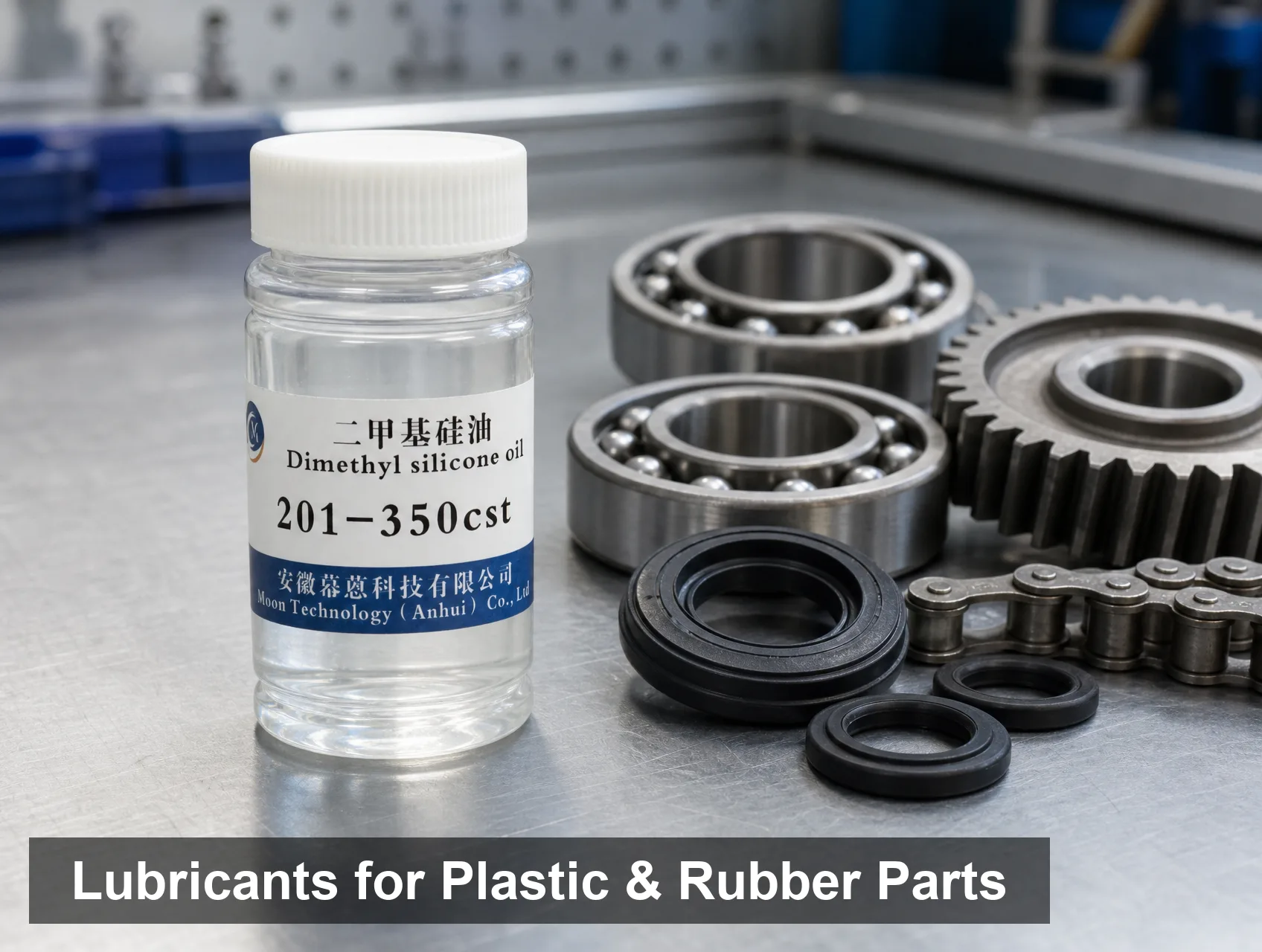
🧴 Cosmetics & Personal Care
Choose D5 for light, quick-drying textures in serums and deodorants. Low-viscosity dimethicone for smooth skin feel in lotions. Dimethiconol in D5 for durable film-forming in hair conditioners.
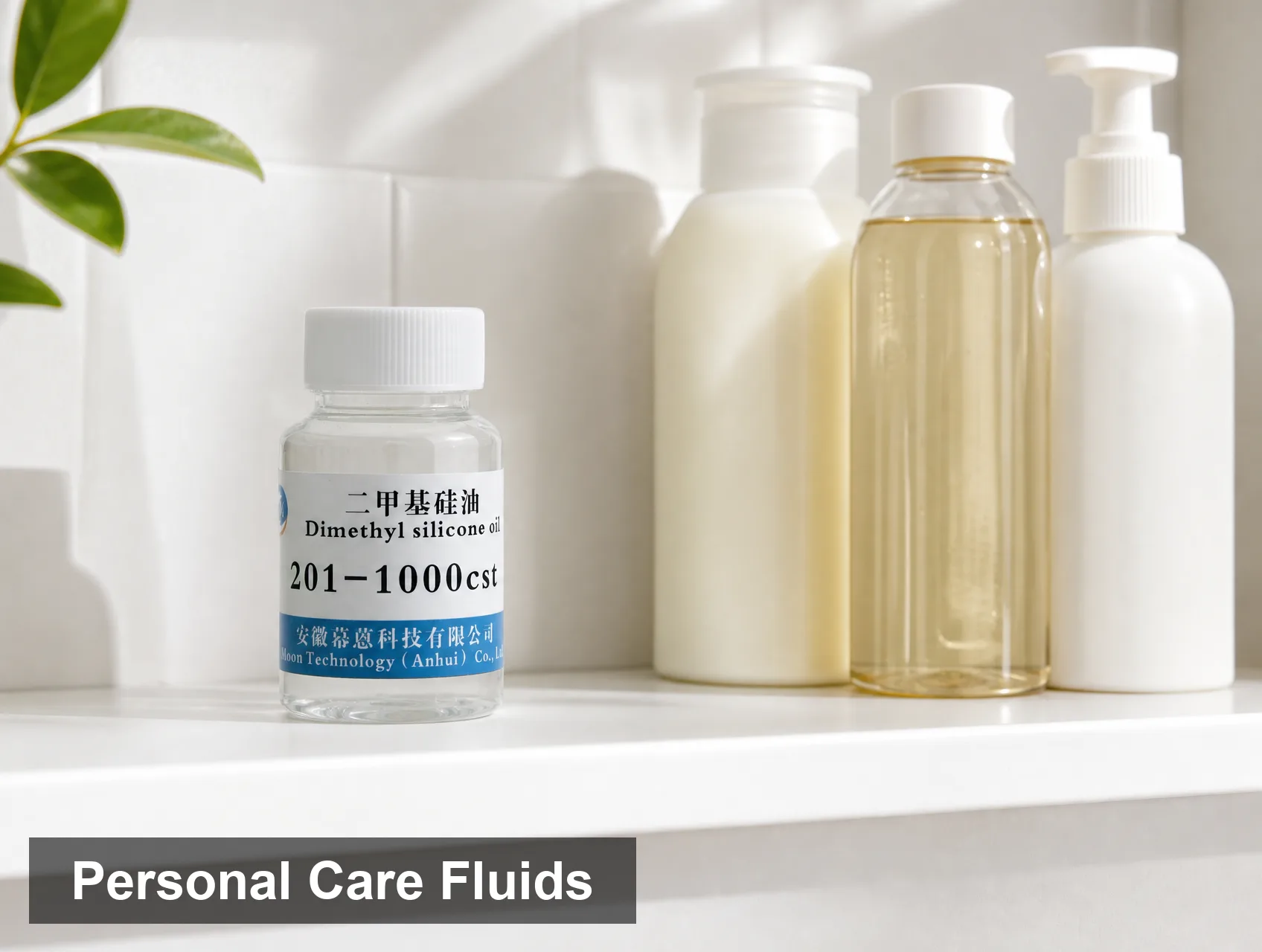
🧵 Textile Finishing
Hydrogen-containing silicone oil for durable softness and hydrophobicity on fabrics. Dimethyl oil for fiber lubricants in spinning and weaving. Dosage typically 0.5–5 g/L bath.
🏗️ Mold Release
D5 or low-viscosity dimethyl silicone oil (5–50 cSt) applied as a thin film before casting. D5 evaporates after use, leaving a clean part. Non-evaporating grades for reusable moulds.
🔥 High-Temperature Lubrication
Methyl phenyl silicone oil retains viscosity and does not coke at 250–300°C where standard dimethyl oil degrades. For oven chains, conveyor belts and thermal oil systems.
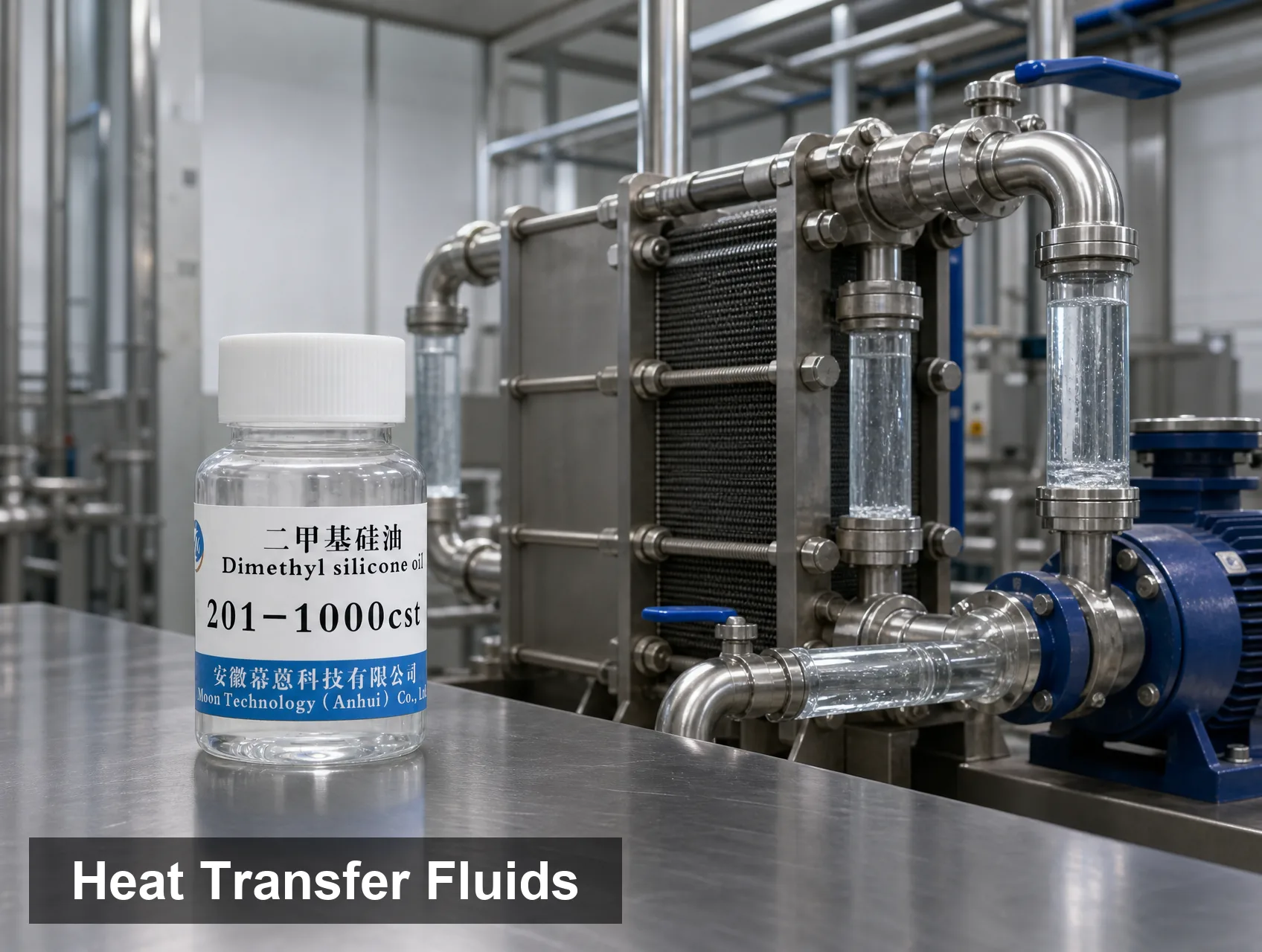
💧 Waterproofing & Surface Treatment
Hydrogen-containing silicone oil reacts with -OH groups on mineral surfaces (stone, concrete, glass) to form a durable hydrophobic film. Applied diluted in solvent or emulsion.
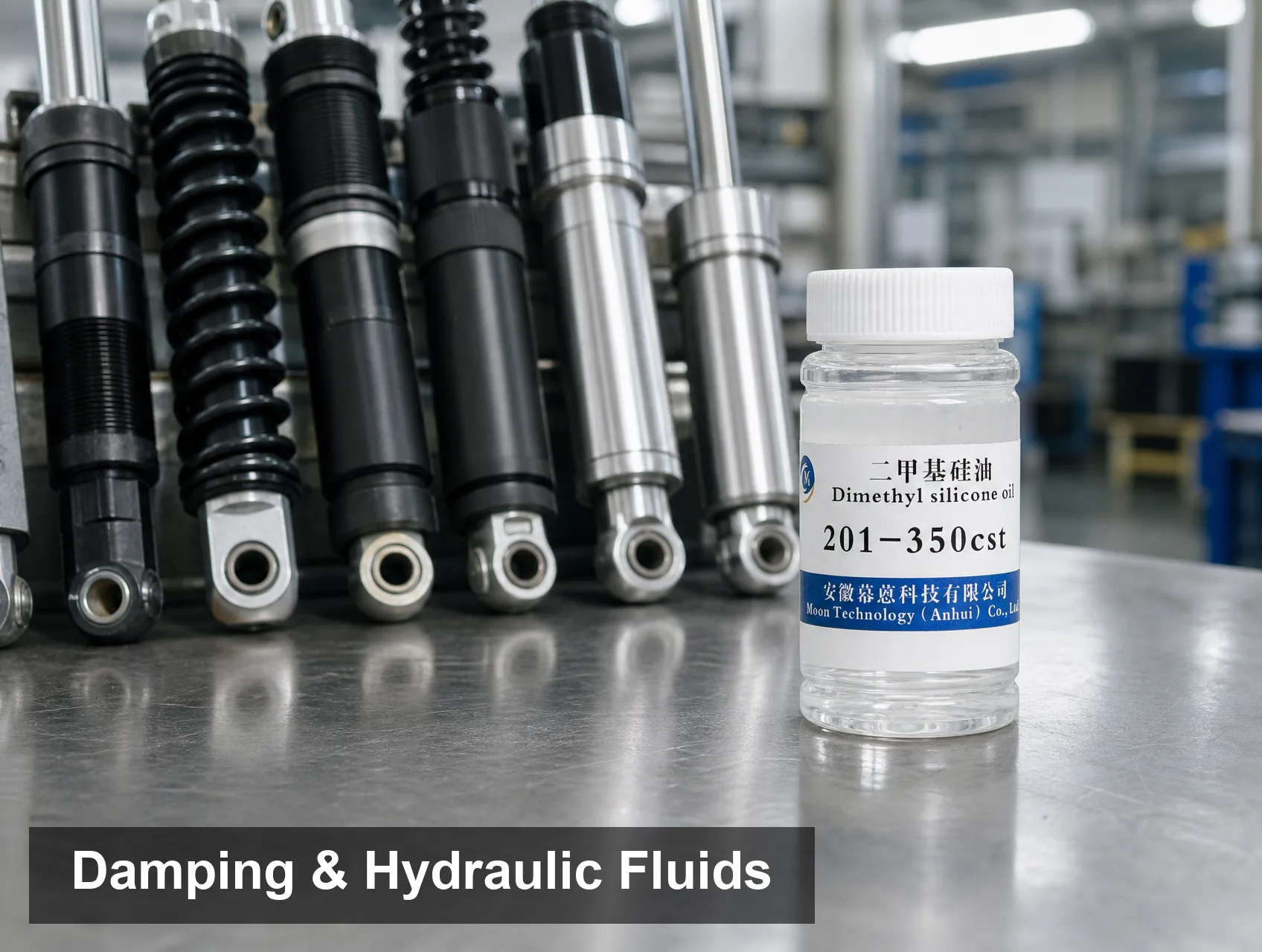
💡 LED & Optical Encapsulation
201-1000cst dimethyl silicone oil offers a refractive index of 1.403 — very close to glass — making it ideal for LED dome encapsulation, optical lens bonding, and fiber optic couplers. It transmits light with minimal reflection loss, remains thermally stable at high temperatures, and protects LED chips from moisture and dust ingress.
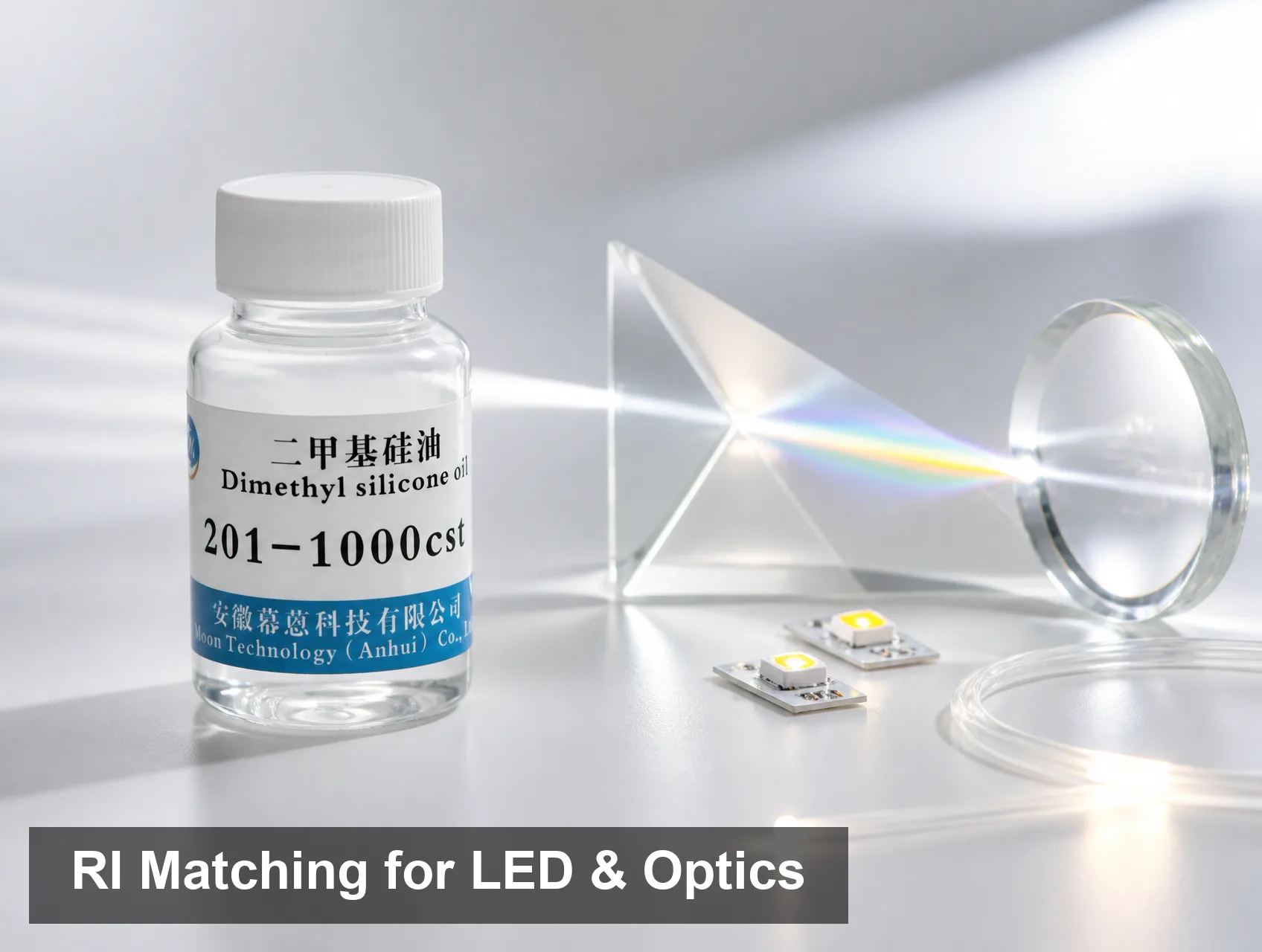
☀️ Solar PV & Thermal Management
201-1000cst silicone oil is used in solar PV inverter heat exchange systems, concentrated solar power (CSP) thermal storage, and lab precision heating baths. Its high specific heat capacity, wide operating range (-40°C to 200°C), and chemical inertness make it the clean, reliable alternative to mineral-based thermal fluids.
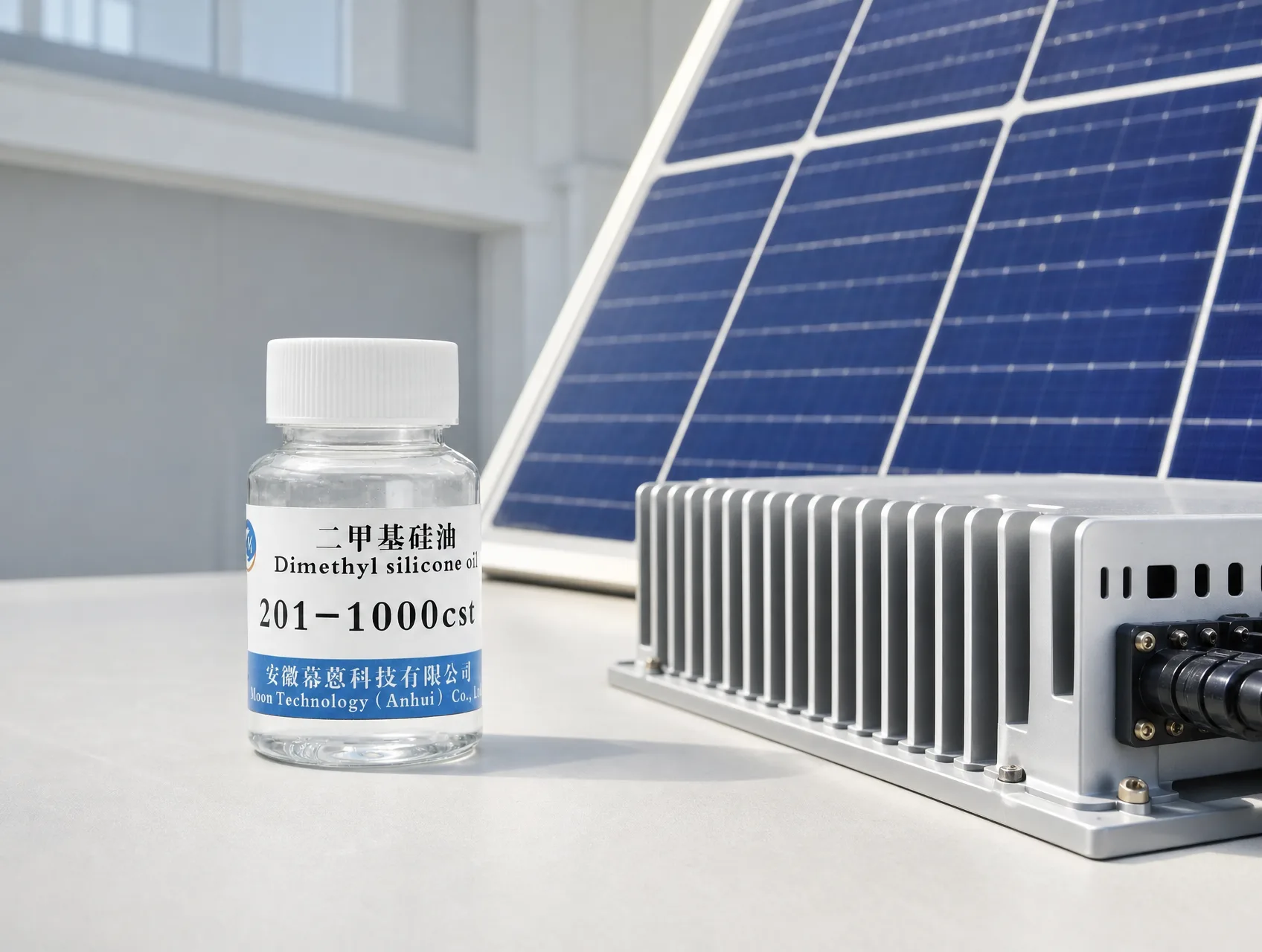
⚡ Transformer & Electrical Insulation
201-350cst silicone dielectric oil is a fire-safe alternative to mineral oil in power transformers. Dielectric strength exceeds 15 kV/mm, flash point is above 300°C — significantly reducing fire risk in indoor and rooftop transformer installations. Its hydrophobic surface prevents moisture ingress, extending transformer service life.
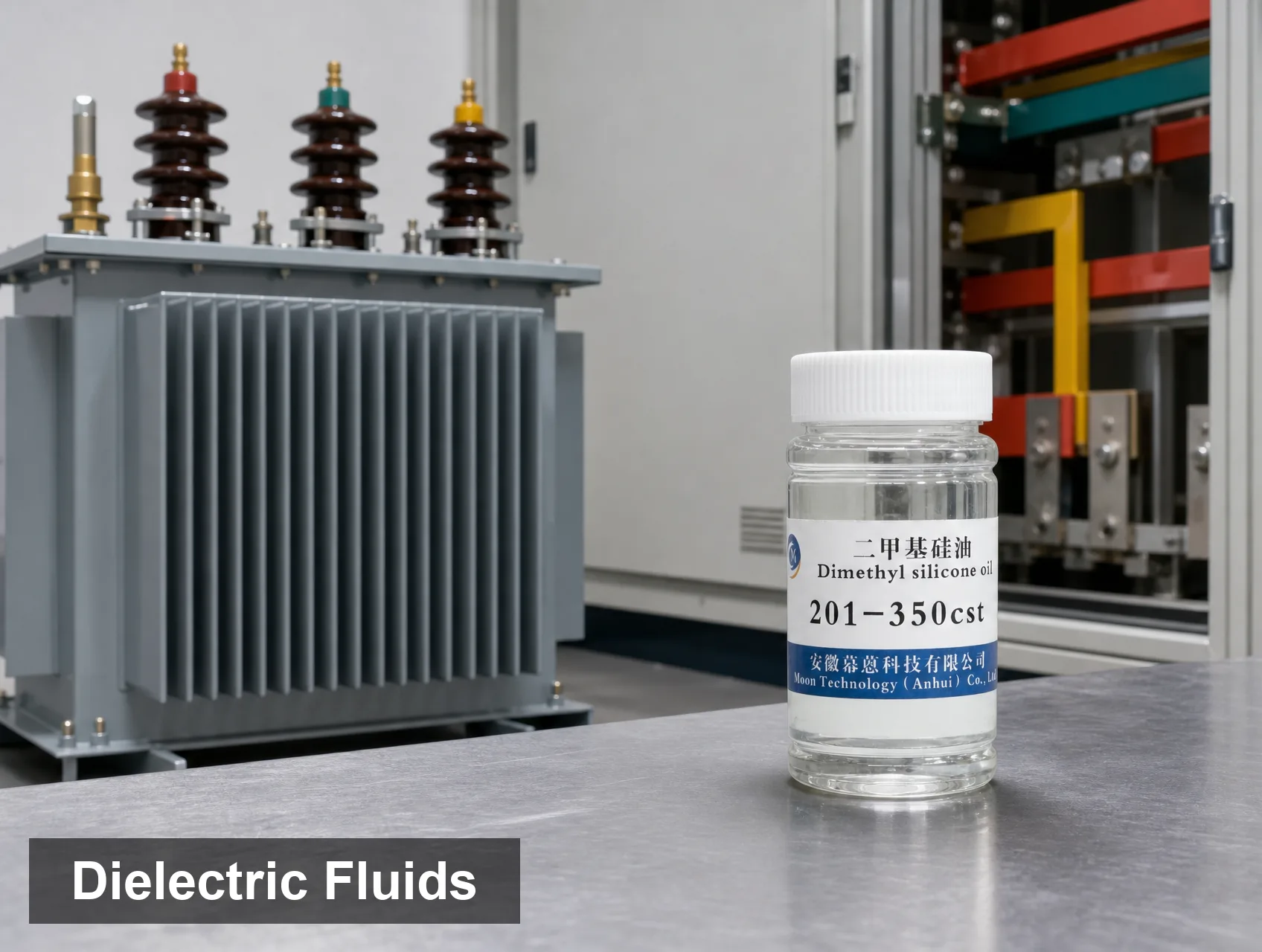
What Moon Technology Supplies
We manufacture and supply the full range of silicone oil types from our facility in Bengbu, Anhui. All grades are available with TDS, MSDS and batch COA. Sample quantities of 1–2 kg are available for quality evaluation.
| Product | Type | Viscosity Range | Key Certifications |
|---|---|---|---|
| 201 Dimethyl Silicone Oil | Dimethyl / PDMS | 5 – 100,000 cSt | FDA 21 CFR 173.340, Kosher |
| D5 Cyclopentasiloxane | Cyclic (D5) | 4 cSt (volatile) | REACH, FDA, EU Cosmetics Regulation |
| Methyl Phenyl Silicone Oil | Phenyl-modified | 10 – 800 cSt | Industrial grade |
| Hydroxy Silicone Oil (107) | Hydroxy-terminated PDMS | 1,000 – 70,000 cSt | Industrial grade |
| Vinyl Silicone Oil | Vinyl-functional | 100 – 100,000 cSt | LSR / HTV grade |
Not Sure Which Grade Fits Your Process?
Describe your application — temperature range, substrate, method of use and performance target. We will recommend a grade and send a sample for your trials.
📩 Ask Our Technical TeamFrequently Asked Questions
Ready to Specify a Silicone Oil for Your Application?
Tell us the viscosity you need, the application, and the temperature range — we will confirm the grade, send the TDS and arrange a sample shipment within 24 hours.
📩 Request TDS & Sample